Recollection · Paris · 2011–2019
Lima Technology
Notes on building a personal cloud: liquid storage, no sync, private by design — and what it cost to try.
By Séverin Marcombes · Founder & CEO, Lima Technology
Between 2011 and 2019 I founded and ran Lima — a company that tried to redesign personal file storage from first principles. We built a peer-to-peer filesystem, a zero-setup NAS dongle, and clients for every major platform. The company is gone. What follows is a recollection of the problem we were chasing, the bets we made, and how the road actually went.
The product film — Discover Lima, 2015.
The problem, as I saw it then
In 2011, personal storage still mirrored the hardware underneath it. Every device was a shoebox: your Mac had its drive, your PC had another, your phone a third. To have the same things in two places, you copied files by hand and hoped the organization stayed identical. Buy another drive, a cloud bucket, a Dropbox plan — each one was just another shoebox.
Sync products papered over a corner of that mess. They let you keep a folder the size of a USB key roughly in sync — not your whole life. And they asked you to rent your files to someone else's servers, at a moment when privacy anxiety around cloud storage was still very real.
The files were mine. I didn't want to rent them.
The pains were mundane and everywhere: storage was a mess; sync was a pain; backup was never something you wanted to think about. Cloud sync covered a small folder — not the shape of a real library. I wanted my files across my devices without handing them over.
Meanwhile the ingredients for something better already existed: decentralized filesystems, fast home internet, ubiquitous Wi-Fi. The constraint wasn't physics. It was that software still pretended each hard drive was a separate universe.
What we believed the answer looked like
We were opinionated about the end state. Three principles guided everything. One storage space: N devices should show the same files, regardless of OS or capacity — a file on my Mac desktop should be on my Windows desktop too. Liquid capacity: buying a hard drive should expand the space available to you, not hand you another silo to sync into. Location as a choice: prefer cloud? Plug in a bucket. Prefer privacy at home? Plug in a drive. Same system either way.
Buying a hard drive should expand the space available to you — not hand you another silo.
The architectural move was to split presentation from storage. Every device showed the same tree — the full set of files and folders — whether or not the bytes lived locally. "Transferring" a file between devices became mostly metadata: a name, a size, a pointer to where the content could be fetched. That made the UI feel instant, even when the payload hadn't moved yet.
The source of truth was a backend pool — one or more NAS devices and/or cloud buckets — holding every file, replicated so we could survive failures. Each device's local disk was only a cache: it kept what you were likely to open next. Cached files behaved like local ones; the rest streamed in. Devices cooperated — a fully decentralized mesh — when you reached for something that wasn't already nearby.
If that sounds a little like what iCloud Drive does today: yes. We were shipping a cross-platform version of that idea years earlier, without putting the canonical copy on our servers.
What we had to build
Making that vision real meant inventing more of the stack than I'd like to admit. Looking back, these were the layers.
A decentralized P2P virtual filesystem — written in C, running on Android, iOS, Linux, macOS, and Windows. Same eventually-consistent tree on every device; torrent-like multi-source transfers; rules that kept every file in the backend pool and on at least two nodes; end-to-end encryption throughout.
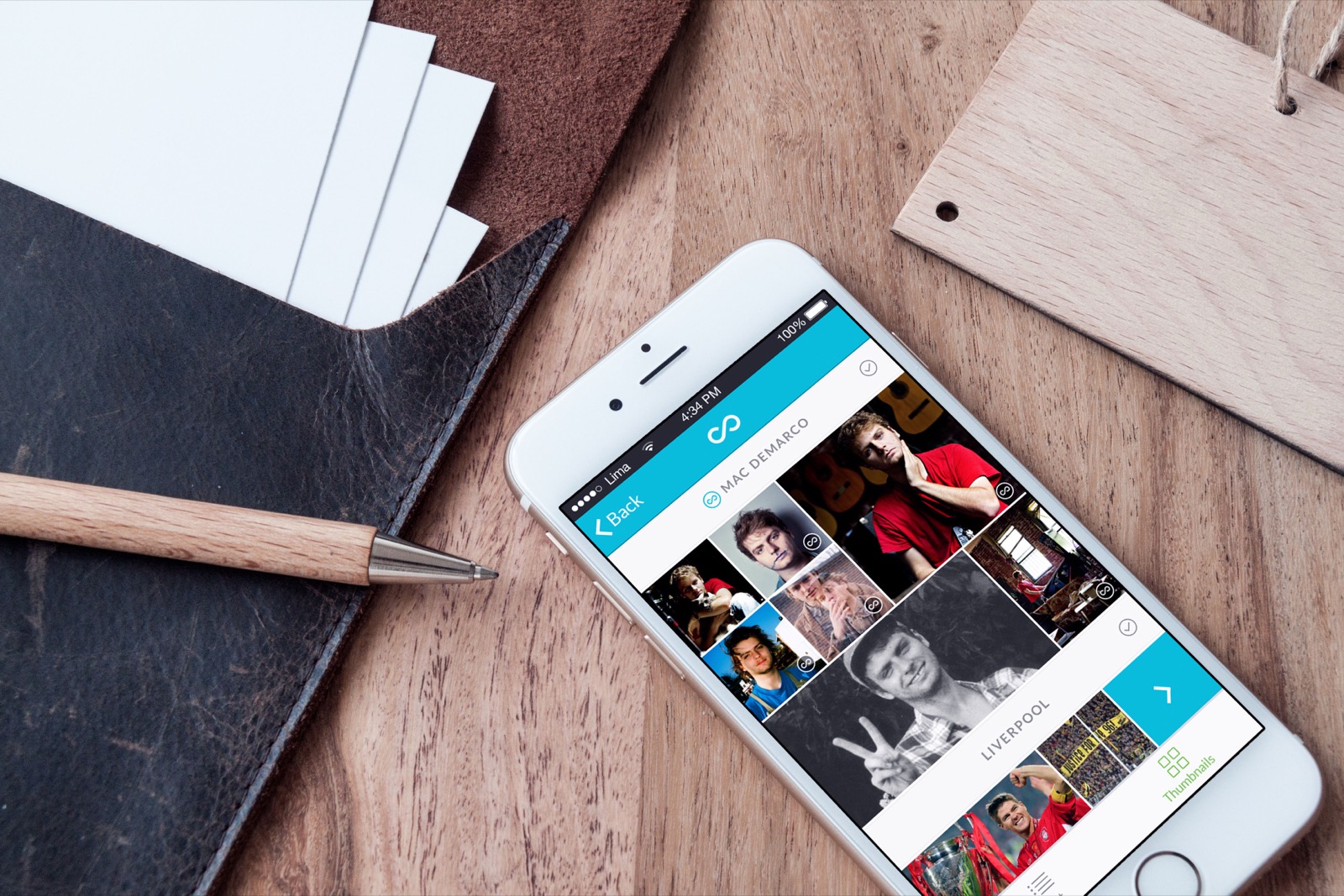
A mobile filesystem UI — because phones couldn't just grow a Finder. Deep Finder and Explorer integration — files you could see that weren't physically on disk; progress on the icon when you opened one; pinned files that stayed available offline; grayed-out entries when you were offline and the bytes weren't cached. Apple's public APIs for that kind of thing came later.
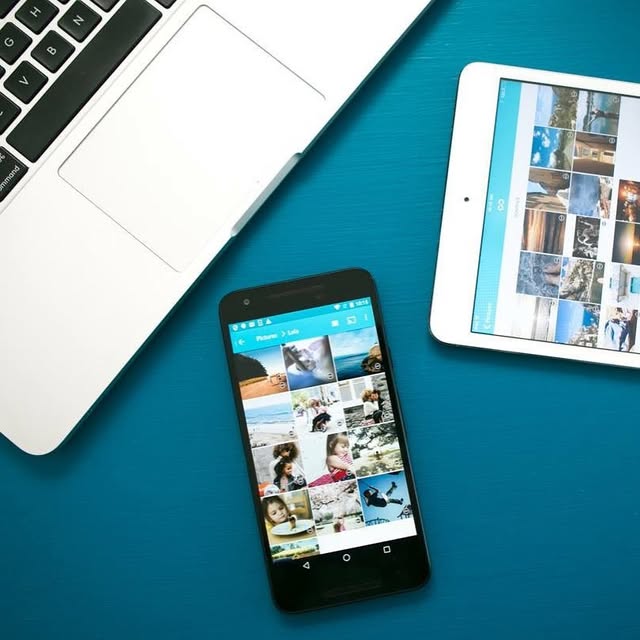
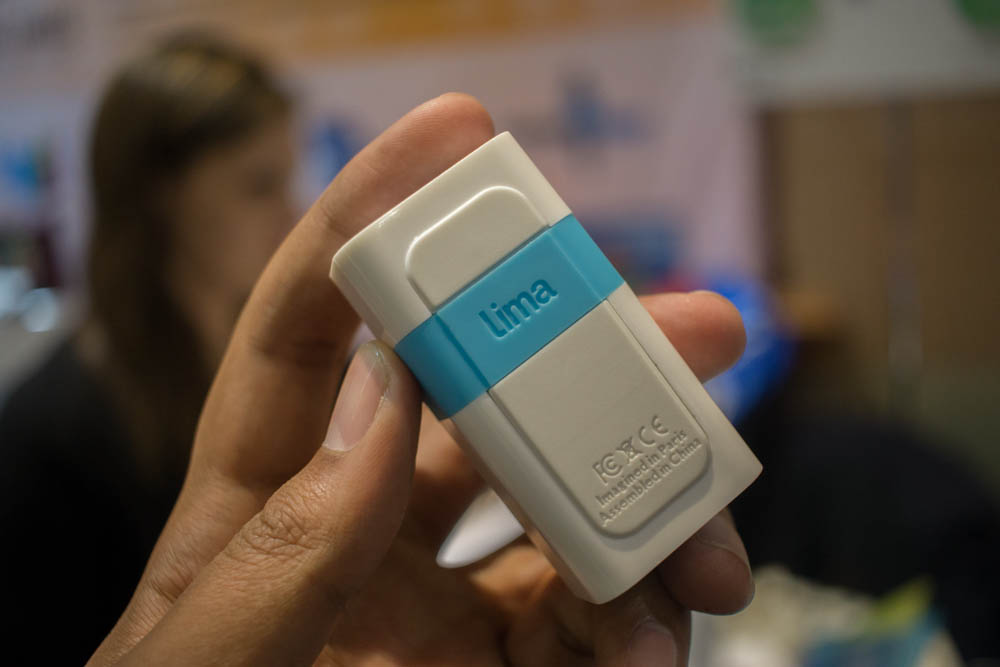
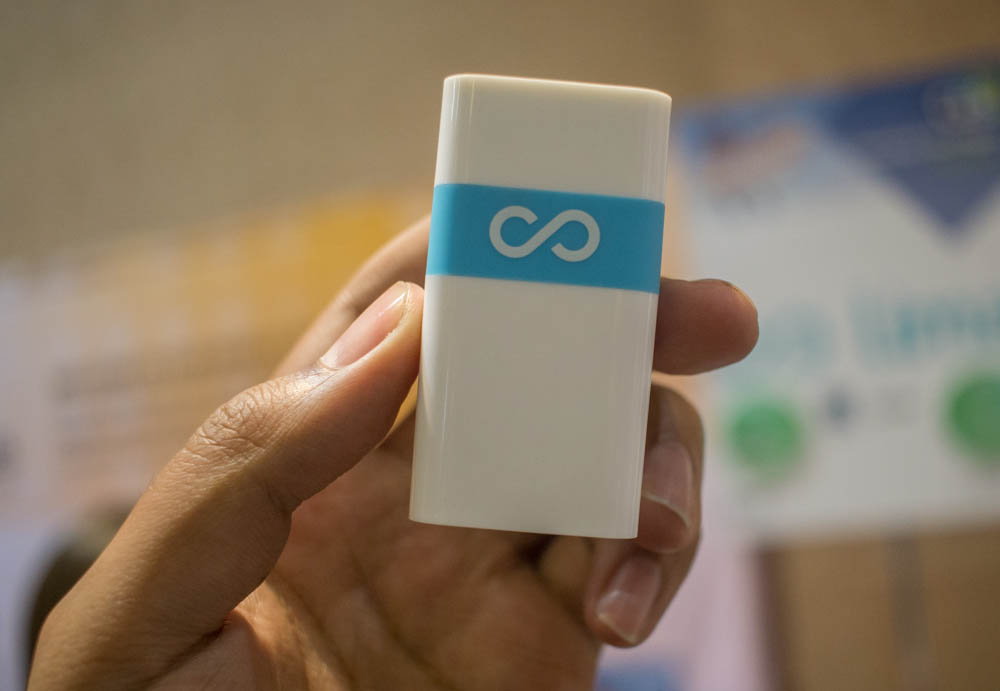
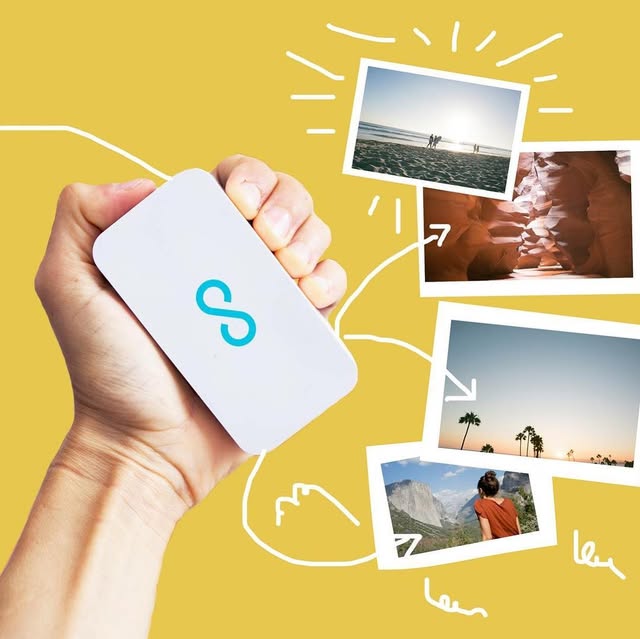
And a zero-setup NAS dongle — designed, built, and productized. Plug it into the router, plug a drive into it — suddenly you had more liquid storage. That little box was the product people could hold; the filesystem was the product that made it make sense.
How the road went
We launched on Kickstarter in 2013 — at the time, the 6th biggest campaign ever in the tech category, about $1.2M raised. We raised Seed and Series A. We shipped the device late: backers waited roughly a year and a half while the software finally came together. We shipped a second generation with roughly 40× more powerful hardware and much more reliable software. Sales were finally starting to look great — until funding problems forced us to kill all distribution channels.
I had always thought the biggest risk on the project was technical. What bit me was underpreparedness on fundraising and investor relations. We made a pre-acquisition deal with another startup; they didn't honor their end. We ran out of cash. By 2019 the project was closed, and the company was acquired by one of our clients.
We could have happily made much more margin just selling privacy.
I still think the design problem was real. In some aspects, it still is. Apple and Microsoft have since opened APIs that make similar solutions easier to build; iCloud has shifted toward syncing the user's whole library. But sync, from my point of view, is still a pain in the ass.
We were early, and we paid for that with complexity. My inexperience at the time also pushed us to aim at the stars, when I think we could have happily made much more margin just selling privacy. This isn't a complete overview — just the record of what we were trying to do.